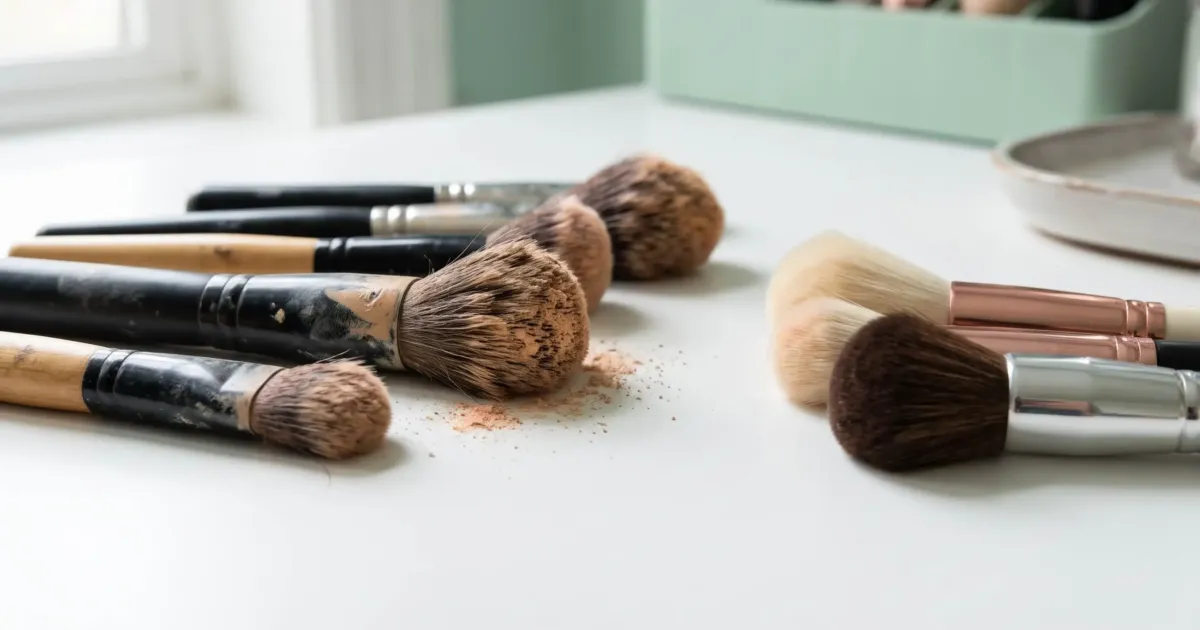
Dirty makeup brushes can cause acne, skin rashes, fungal and bacterial infections, and eye infections like pink eye. The fix is simple: wash your brushes every 7 to 10 days, which is what the American Academy of Dermatology recommends.
Most people wash them far less often. In a Cosmetify survey, 26% of people said they had never washed their makeup brushes. Another 37% cleaned them only once every six months.
In this guide, you will learn which skin and eye problems dirty brushes can cause, how often each type of brush needs cleaning, and how to wash and disinfect them the right way.
In this article
Why Makeup Brushes Get So Dirty
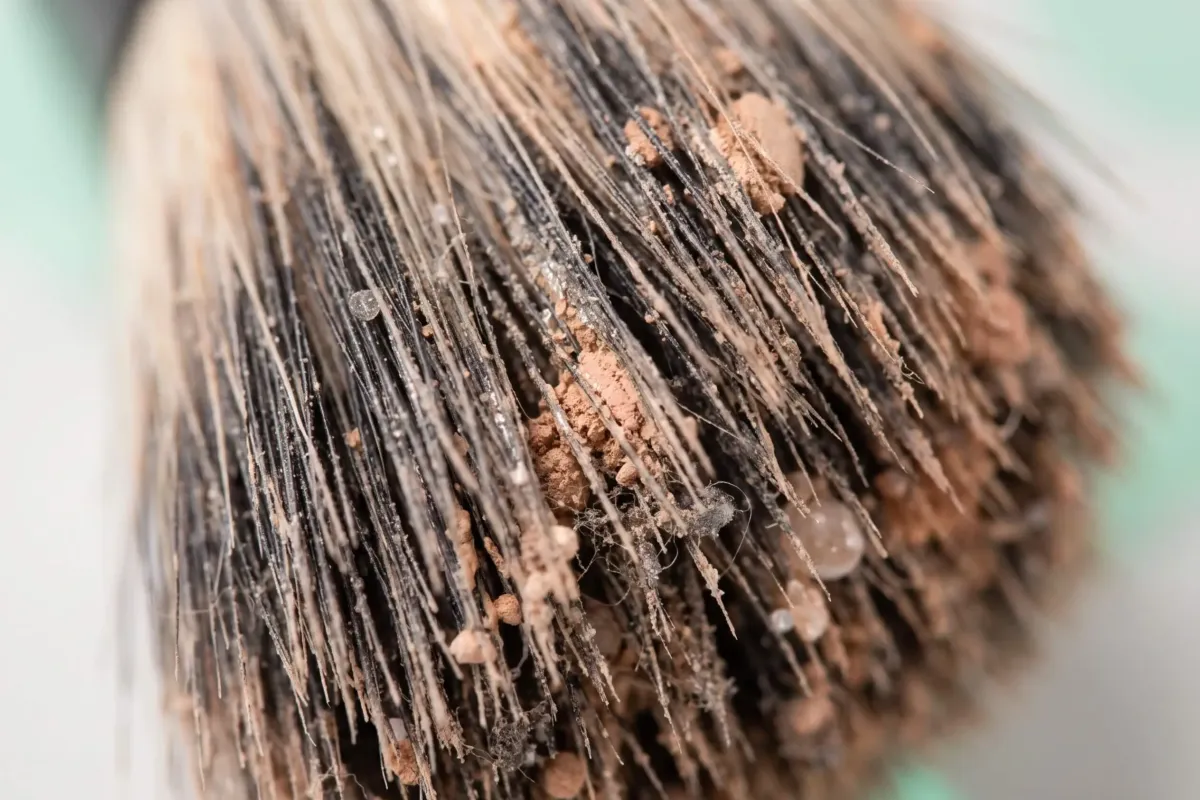
Every time you use a brush, it picks up more than makeup. It collects oil from your skin, dead skin cells, sweat, dust from the air and germs from your hands. Then you dip it back into your products and put it on your face again. Germs move in a loop from skin to brush to product and back to skin.
The numbers are hard to ignore:
- A study by UK brand Spectrum Collections swabbed unwashed brushes after two weeks of use. They held as much bacteria as a toilet seat, or more, no matter where they were stored (The Mercury).
- The unwashed brushes showed signs of E. coli, yeast and mould.
- Research from Aston University found fungal growth on 96% of the makeup brushes tested (Yahoo Life).
Brushes used with liquid or cream products get dirty fastest. Bacteria and fungi grow best in damp places, so a foundation brush builds up germs quicker than a dry powder brush. Warm, humid weather speeds this up even more.
Skin Problems Caused by Dirty Makeup Brushes
The skin on your face is the first place dirty brushes cause trouble. Here are the most common problems, from mild to serious.
1. Acne and Breakouts
This is the most common one. Old makeup, oil and dead skin on the bristles get pushed into your pores. Bacteria on the brush then add to the swelling. If you get new pimples soon after doing your makeup, even with a good skincare routine, your brushes may be the cause. Cleveland Clinic points to dirty brushes as a common hidden reason for makeup breakouts.
People with oily, acne-prone or sensitive skin feel this the most.
2. Skin Irritation and Rashes
Dried product makes bristles stiff and rough. A rough brush scratches the skin as you blend. Add old product and germs, and you may notice redness, itching, dry patches or a rash where you applied makeup.
3. Fungal Infections
Yeast and mould grow well in damp bristles. When a brush stays wet after use or after washing, fungi can spread to your skin. The American Academy of Dermatology lists fungal infection as one risk of dirty brushes. Signs include itchy, red, scaly patches that do not clear with normal acne care.
4. Bacterial Infections (Staph and Impetigo)
Unwashed brushes can carry staph and strep bacteria. A dermatologist quoted by Livestrong explains that staph can cause impetigo, a skin infection with blisters and honey-coloured crusts. The same bacteria can also cause folliculitis, which looks like small pus-filled bumps around hair follicles.
These infections usually need treatment from a doctor, so do not ignore them.
5. Cold Sores
The virus behind cold sores (herpes simplex) can pass from person to person through shared makeup tools. This is the main reason never to share lip brushes or use testers with a brush someone else has used.
Eye Problems Caused by Dirty Makeup Brushes
Eye brushes carry the highest risk because the skin around the eyes is thin and the eye itself has little protection. In one brush-swab study, the eyeshadow brush had the most yeast of any tool in the makeup bag (Aventus Clinic).
Pink Eye (Conjunctivitis)
Bacteria on eyeshadow, eyeliner and brow brushes can reach the eye and cause conjunctivitis. Signs include redness, itching, a gritty feeling, watery or sticky discharge, and crusty lashes in the morning. Pink eye spreads easily, which is why health departments warn against sharing eye makeup and brushes.
Styes and Eyelid Infections
A stye is a painful red lump on the edge of the eyelid. It usually starts when bacteria get into an oil gland or lash follicle. Dirty liner and lash tools can bring those bacteria right to the lash line.
Infections Around the Eye
In rare cases, bacteria from a dirty under-eye or concealer brush can cause cellulitis, an infection of the skin and tissue around the eye. Swelling, pain, warmth and redness that spread around the eye need a doctor’s care the same day.
If you have had an eye infection, wash or replace every brush you used near your eyes once it clears. Throw away eye products you used during the infection too.
How Often Should You Clean Makeup Brushes?
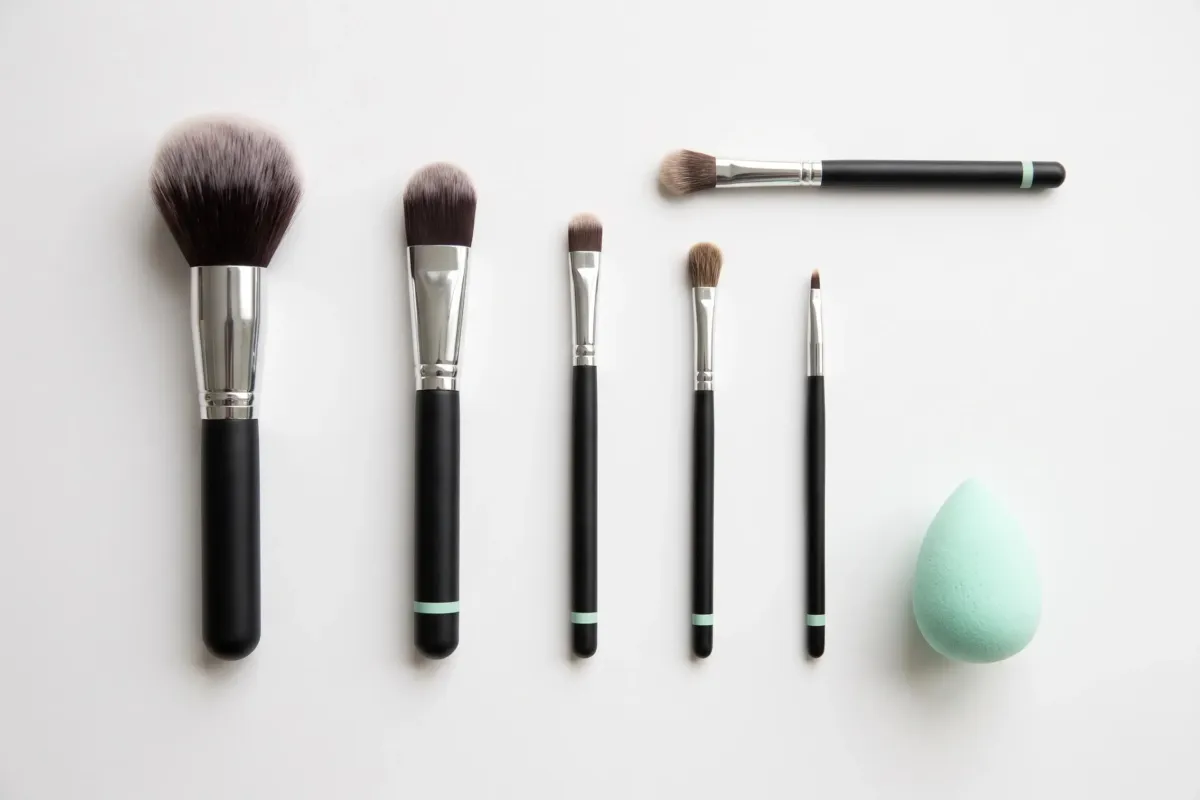
Wash your makeup brushes every 7 to 10 days, as the American Academy of Dermatology recommends. Brushes used with wet products, or used on acne-prone skin, need washing more often.
| Tool | How often to wash | Why |
|---|---|---|
| Foundation and concealer brushes | Every 2 to 3 days, or weekly at most | Liquid and cream products keep bristles damp, so germs grow faster |
| Beauty sponges | After every use | Sponges hold water and trap bacteria deep inside |
| Eyeshadow, eyeliner and brow brushes | At least once a week | They touch the eye area, where infection risk is highest |
| Lip brushes | After every use | Lips and the cold sore virus make sharing and reuse risky |
| Powder, blush and bronzer brushes | Every 1 to 2 weeks | Dry products hold fewer germs, but oil and skin still build up |
Dermatologists quoted by Well+Good suggest washing two to three times a week if you have oily or acne-prone skin. Between deep washes, a quick spray brush cleaner can remove product build-up.
How to Clean and Disinfect Makeup Brushes
You only need lukewarm water and a gentle cleanser, such as baby shampoo, mild dish soap or a brush cleanser. A full wash takes about 10 minutes.
- Wet the bristles. Hold the brush with the bristles pointing down and run them under lukewarm water. Keep water away from the metal part (the ferrule), because water there loosens the glue.
- Add cleanser. Put a small drop of cleanser in your palm or on a silicone cleaning mat.
- Massage the bristles. Swirl the brush in the cleanser to work it deep into the base of the bristles. Germs often hide in the centre and bottom of the brush, so do not just clean the tips.
- Rinse until the water runs clear. Repeat steps 2 to 4 if colour still comes out.
- Disinfect (optional, once a week or after an infection). Dip only the bristles in 70% isopropyl alcohol for a few seconds, or use a brush sanitising spray. Rinse again if your skin is sensitive.
- Squeeze and reshape. Gently press out water with a clean towel and shape the bristles back to their original form.
- Dry flat or bristles down. Lay brushes flat on a clean towel with the bristles hanging over the edge. Never dry them standing upright, as water runs into the handle.
Make sure brushes are fully dry before you use or store them. Damp bristles are where mould and yeast grow best.
Storage tip: Keep brushes in a closed case or drawer, or in a cup away from the toilet. Clean your makeup bag and brush holder every few weeks too.
When to Replace Brushes and When to See a Doctor
Even with regular washing, brushes do not last forever. Replace a brush when:
- The bristles shed, split or feel rough on your skin
- The brush keeps a bad smell after washing
- The shape stays bent or splayed
- You used it during a skin or eye infection and cannot disinfect it well
Beauty sponges wear out faster. Most should be replaced every 1 to 3 months.
See a doctor if you notice:
- Pimples or a rash that do not improve after you start washing your brushes
- Blisters, crusting or pus-filled bumps on the skin
- Red, painful, swollen or crusty eyes, or any change in your vision
- Swelling or redness that spreads, or comes with a fever
This article is for general information and does not replace advice from a doctor or dermatologist.
Frequently Asked Questions
Can dirty makeup brushes cause acne?
Yes. Dirty brushes push oil, dead skin and old makeup into your pores and spread bacteria across your face. This can lead to clogged pores and breakouts, especially on oily or acne-prone skin.
Can dirty makeup brushes cause pink eye?
Yes. Bacteria on eyeshadow, eyeliner and brow brushes can cause conjunctivitis. Sharing eye brushes raises the risk even more.
Can dirty makeup brushes cause a fungal infection?
They can. Yeast and mould grow in damp, unwashed bristles and can pass to your skin. Always let brushes dry fully after washing.
How often should you clean makeup brushes?
Every 7 to 10 days for most brushes. Wash foundation brushes every few days, and sponges and lip brushes after every use.
Is it bad to never wash your makeup brushes?
Yes. Unwashed brushes can carry E. coli, staph, yeast and mould. They also apply makeup unevenly and wear out faster.
What is the best way to disinfect makeup brushes?
Wash with a gentle cleanser and water, then dip the bristles in 70% isopropyl alcohol or use a brush sanitising spray. Let them dry flat.
References
- American Academy of Dermatology: How to clean your makeup brushes
- Cleveland Clinic: Think makeup makes you break out? It might be dirty brushes
- Livestrong: How often to clean makeup brushes
- Well+Good: How often you should wash your makeup brushes
- The Mercury: Spectrum Collections brush study
- Aventus Clinic: The dirtiest brushes in your makeup bag
- HuffPost UK: Cosmetify brush-washing survey
- Yahoo Life: Aston University brush findings